How can a farm become a place where visitors discover agriculture in an engaging and accessible way? Inagro supports farms that welcome visitors through training, practical advice and opportunities for farmers to learn from one another. This helps farmers develop the skills they need to share their knowledge with schools and the wider public. At Belhop, a hop farm in Poperinge, Annabel explains how this support helps her offer visitors an educational and enjoyable experience.
Marijke Willaert
Inagro
Supports visitor farms in developing their educational activities and strengthening their connection with the wider public.

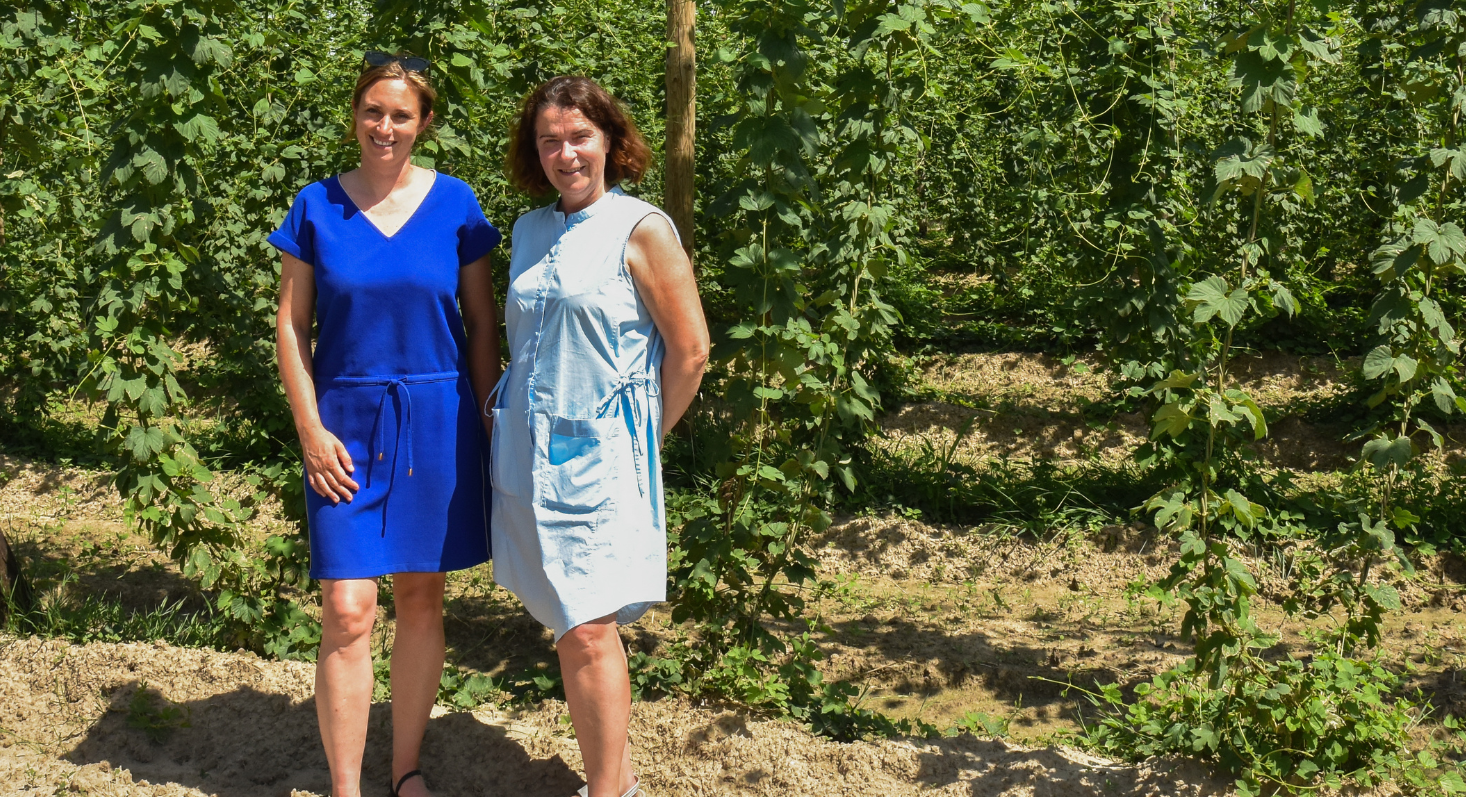
Annebel
Belhop
Runs Belhop, a hop farm in Poperinge, together with her husband, Bart. Alongside hop production, they welcome school groups and other visitors, offering an insight into hop growing and modern agriculture.
How does Inagro support farmers who welcome visitors to their farms?
Marijke Willaert (Inagro): We support farms in developing their educational activities and creating meaningful experiences for their visitors. This starts with a basic training course in agricultural education, where farmers learn how to explain their work to different audiences. In addition, we organise practical training sessions on topics such as teaching methods, target groups and safety, as well as opportunities for farmers to exchange experiences. We also provide advice on communication and on how to deal with critical questions from visitors.
Why is this kind of support important?
Marijke: Farmers are primarily focused on running their businesses. Welcoming visitors requires additional skills. You need to adapt your story to your audience and explain complex topics in an accessible way. Visitors may also ask critical questions about issues such as crop protection products or other agricultural practices. It is important that farmers feel confident responding to these questions. Through training and peer exchange, we help them develop that confidence.
Annabel, how has this support helped you at Belhop?
Annebel (Belhop): My husband Bart and I took over the hop farm from my in-laws about eight years ago. We continued growing hops and welcoming visitors to the farm. I didn’t have a background in teaching myself, but rather in social work. Inagro’s basic training course helped me develop my own approach to guiding visitors. You learn to think about how you explain things and how to adapt your story to different audiences. A group of young children, secondary school students and adults all need a different approach.
How do farmers learn from one another?
Marijke: We often organise additional training sessions at another visitor farm. This makes the sessions very practical: farmers can see how their colleagues welcome visitors, which educational materials they use and how they approach certain topics. They can take ideas straight back to their own farms. The opportunity to meet other farmers is also valuable. They often face similar challenges and can share experiences and solutions.
Annebel: That contact is really useful. You realise that other farmers face similar questions, and you can learn a lot from one another. Sometimes it even leads to collaboration. For example, three visitor farms attended a tourism fair together. You do not have to do everything on your own, and you can strengthen one another.
Belhop welcomes a wide range of visitors. How do you make sure everyone learns something from their visit?
Annabel: We welcome almost 2,000 visitors a year, including school classes, associations, tourists, companies and families. During our tours, we tell the story of hop throughout the year. We start in the fields and explain how the plants grow, what work is involved and which machines we use. We then follow the process through harvesting and drying, before looking at the products made with hops.
We try to make the story as tangible as possible. Visitors can taste our homemade hop lemonade and try raw hops, which have a remarkably bitter flavour. With support from Inagro, we also developed a treasure-hunt map with activities for children. We still use it today to get younger visitors actively involved in the tour.
Inagro also supports educational farm visits focused on STEM. What do these involve?
Marijke: These visits explore themes such as energy, air, water, manure, labour and time. Farms are ideal places to connect scientific and technical principles with real-life applications. We help farmers present their activities and their businesses from these different perspectives. The visits are tailored to the questions and learning objectives of the teachers.
Annabel: These themes also feature in visits to Belhop. We talk, for example, about automation, irrigation, mechanical weed control and energy consumption. This gives pupils an insight into the techniques we use and the decisions we make as farmers. It is an opportunity to show that agriculture involves much more than simply growing and harvesting crops.
What can these visits contribute to the relationship between agriculture and society?
Marijke: Many people have little direct contact with agriculture in their daily lives. Visiting a farm makes agricultural production more tangible. Visitors discover how food is produced and how much knowledge, technology and work it requires. At the same time, farmers can explain the challenges they face. Inagro helps them communicate this story in a clear and accessible way. Farmers also gain insight into how visitors perceive their profession and local food production. This can sometimes be a real eye-opener.
Annabel: For me, the most important thing is that people enjoy their visit and learn something along the way. I want them to discover our crop and how we work, without imposing a particular opinion on them. If visitors leave having discovered something new or gained a better understanding of hop growing, then I consider the visit a success.
This article is part of the Rural Thrive campaign within the Ruralities project, which aims to strengthen skills and knowledge in rural communities.