From practical innovations to accessible education and training, RURALITIES is taking important steps towards empowering rural communities and supporting sustainable development across Europe and beyond.
In September 2026, the RURALITIES project reached an important milestone with the submission of three new publications focusing on practical rural innovations, education and training opportunities, and the development of a network of Training Centres.
Together, these achievements reflect a shared ambition: to make knowledge more accessible, strengthen local skills and help rural communities turn innovative ideas into practical solutions.
Sharing Practical Solutions That Work
Across rural territories, farmers, entrepreneurs, researchers and local communities are developing innovative approaches to address challenges related to agriculture, environmental sustainability, technology and rural development.
To make these experiences available to a wider audience, RURALITIES has completed its collection of 20 Practice Abstracts, including 10 new examples in its latest publication.
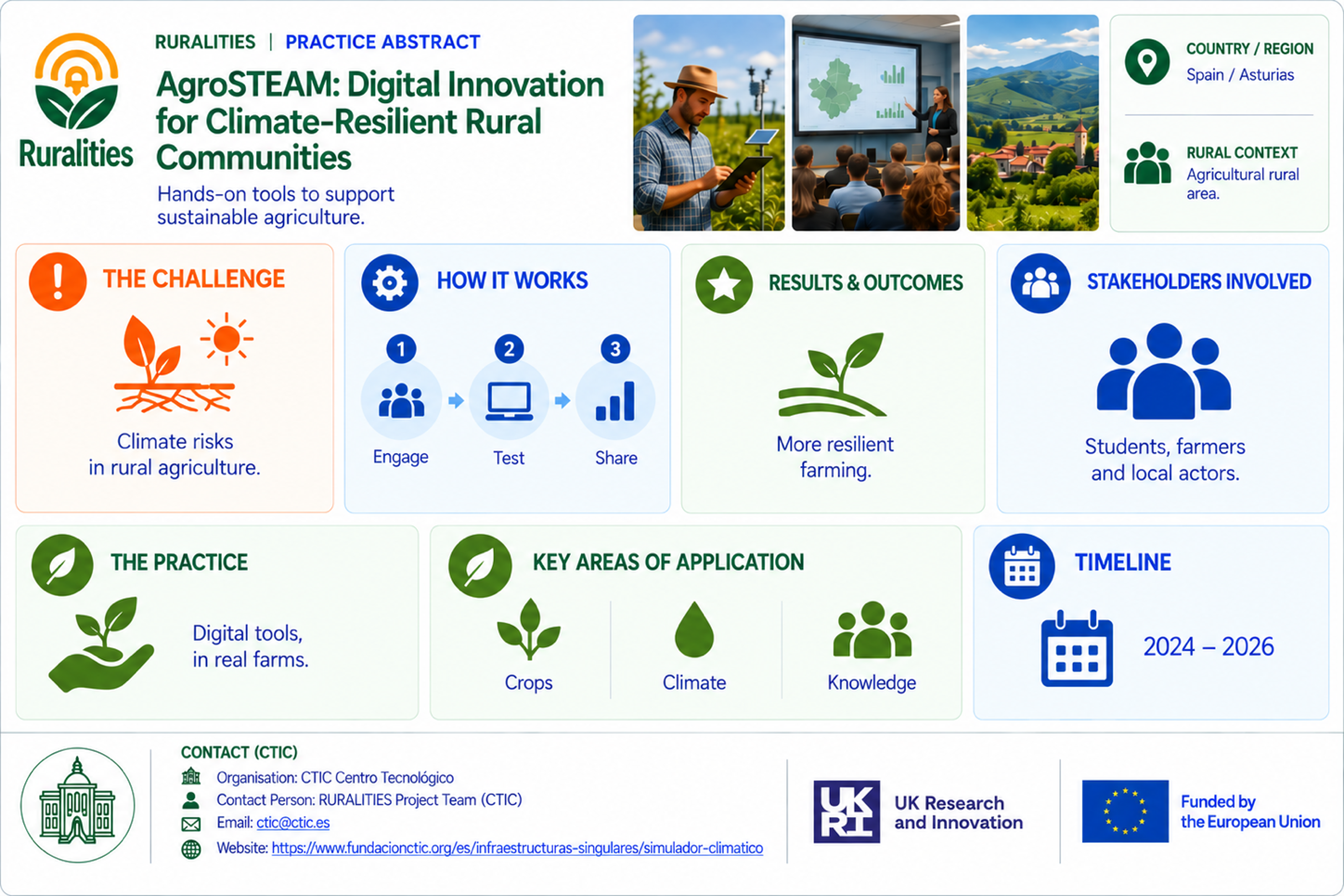
These practical summaries explain real challenges, the solutions explored and the lessons learned. They also provide guidance on how similar approaches could be adapted and applied in other rural communities.
To make the information easier to understand and share, the project has developed attractive, one-page visual summaries for each practice. These resources can support knowledge exchange among farmers, businesses, educators, local authorities and other rural stakeholders.
Making Rural Education More Accessible
Access to relevant knowledge and skills is essential for rural communities to respond to new challenges and opportunities.
RURALITIES has therefore undertaken an extensive mapping of existing education and training opportunities, identifying 373 learning resources across different territories and thematic areas.
The analysis covers sustainable agriculture, environmental protection, tourism, entrepreneurship and rural development, while also identifying areas where further learning opportunities may be needed, including digital inclusion, rural mobility, health and wellbeing, and access to essential services.
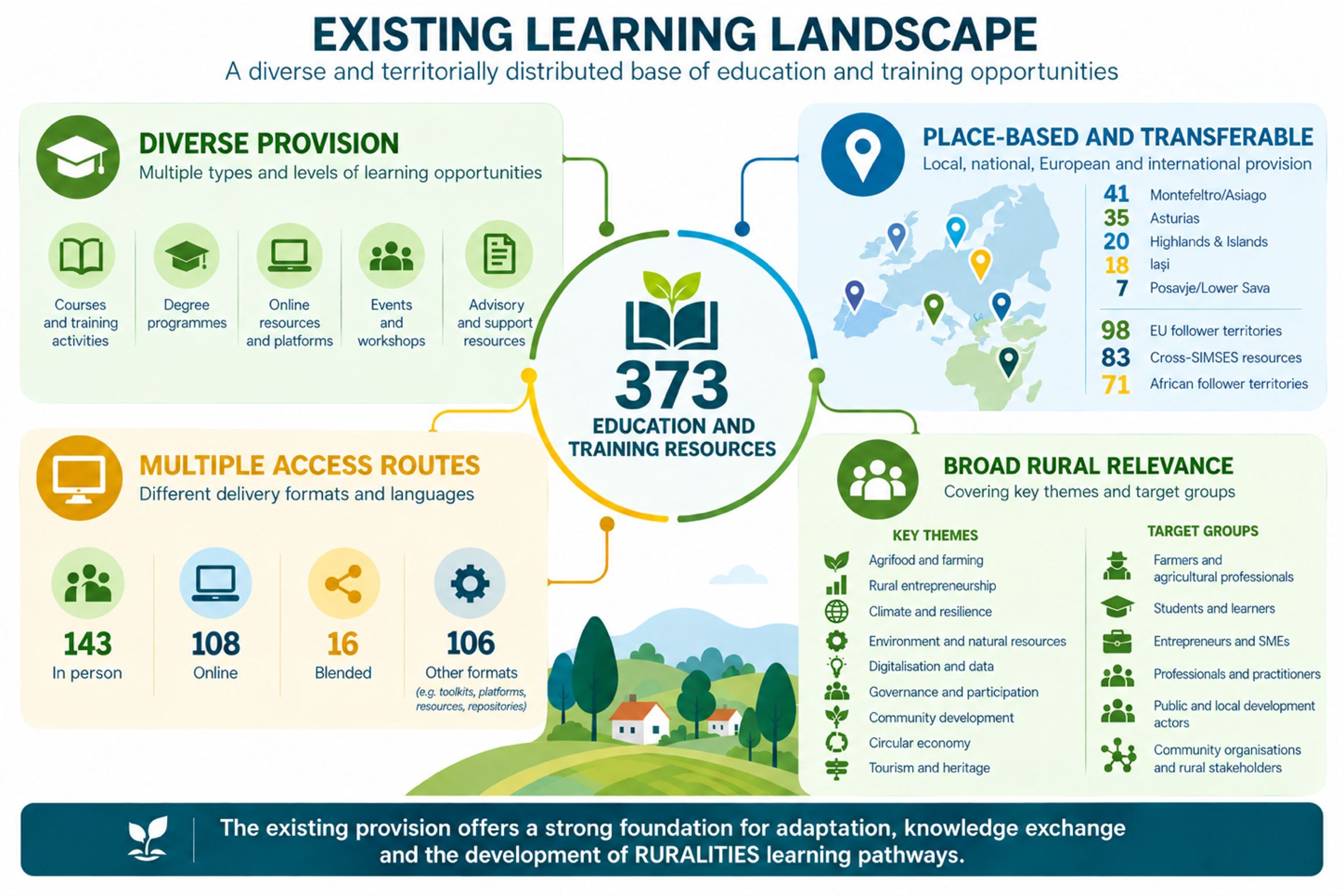
An important finding is that valuable educational resources already exist but are not always easily accessible or adapted to local needs.
By identifying these resources and understanding where gaps remain, RURALITIES is helping create a foundation for more accessible, relevant and locally adapted learning opportunities.
Bringing Knowledge and Skills Closer to Rural Communities
Building on this work, RURALITIES is developing a Network of Training Centres to help rural stakeholders access practical education, professional guidance and opportunities for collaboration.
The centres are designed to respond to the specific needs of participating territories and support different groups, including farmers, rural entrepreneurs, young people, educators, community organisations and local authorities.
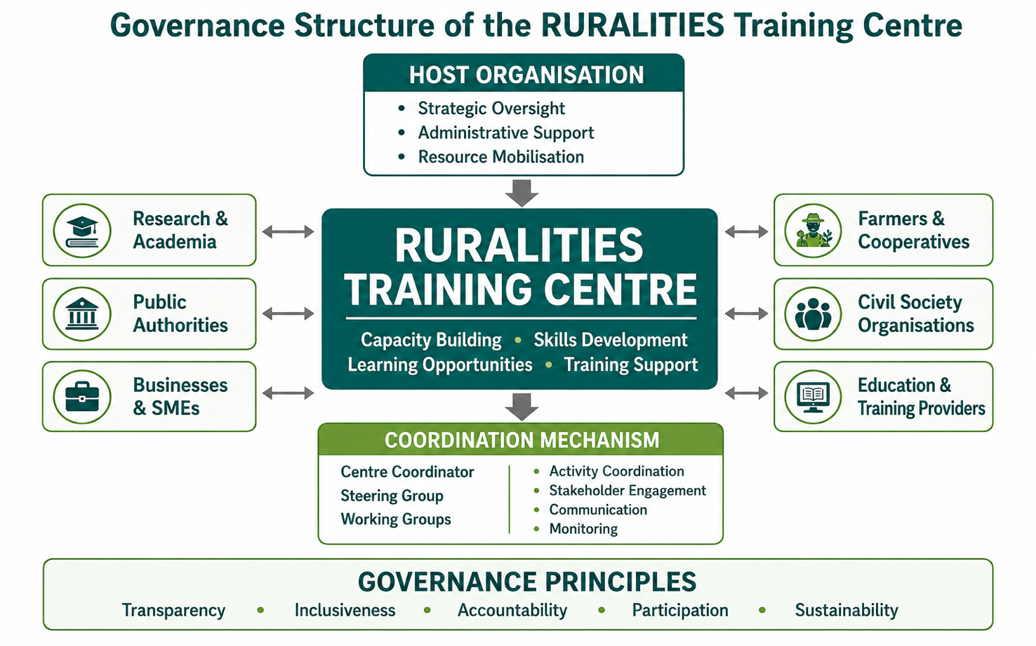
Their activities may include practical workshops, mentoring, training programmes, digital learning, demonstrations and exchanges of experience.
The Training Centres will also work closely with the project’s Living Labs, connecting learning with real-world experimentation and locally developed solutions.
Rather than adopting a single model for every region, the network recognises the diversity of rural territories and promotes flexible approaches that reflect local priorities, available resources and community needs.
Building Stronger Rural Communities Together
The three publications demonstrate how RURALITIES is connecting practical experience, existing knowledge and new learning opportunities into a coordinated approach to rural development.
The Practice Abstracts help communities discover and adapt innovative solutions. The mapping of educational resources identifies relevant learning opportunities and areas for improvement. The Training Centres aim to bring this knowledge closer to rural stakeholders and support its practical application.
Together, these efforts contribute to stronger cooperation between communities, educational institutions, businesses, researchers and public authorities.
The newly submitted publications also provide a foundation for further activities throughout the remaining project period, supporting the long-term accessibility of knowledge, the development of local skills and the sustainability of rural innovation.
Through knowledge sharing, practical learning and cooperation, RURALITIES continues to support rural communities in building a more resilient, inclusive and sustainable future.
Discover More
Explore the three latest RURALITIES publications and discover how their results can support your rural community:
- Practice Abstracts – Final Version (D4.15): Practical examples and innovative solutions for rural territories.
- Rural Scene Education Nexus Characterisation Compendium (D8.1): An overview of 373 mapped education and training resources.
- RURALITIES Interdisciplinary Training Centres (D8.6): A framework for practical learning, skills development and knowledge exchange.